It’s almost that time of year again where our mass delusions entail the wanton refacing of so many vulnerable pumpkins. Getting into the Halloween spirit, I spent the last two weeks raging out in Techland’s latest addition to the DL series. So, grab your spice pumpkin latte, illuminate your candle or kindle and power up your UV lights – because this Halloween I’m summing up my thoughts on the story of Dying Light: The Beast.
Thoughts on The Story of Dying Light: The Beast
The legendary Kyle Crane is back, a main character in the franchise who is all the rage with we fans. His return brings the Dying Light universe full circle to recapture some of the magic of the first game. What’s more, there is closure – no more did he, didn’t he cliff-hangers for players wrestling with the first game’s moral nuclear warhead trolly-problem.
Kyle is alive and kicking, and crushing, and smashing and tearing his way through a world forever changed by the zombie apocalypse. It is no longer about what world was lost – but what we must become to thrive in this new reality. (Sort of like a hard reboot of 2019).
Welcome to Castor Woods: Where Beasts Roam
Unlike the towering glass husks of Hauran in the first Dying Light, the setting of Castor Woods is a large alpine valley. It’s vast and meandering, beautiful and eerie, with natural rock faces, trees to swing from and old, rural areas to drive around. Living in Poland, some of the game aesthetics reminds me of places like Łódź or Zakopane. For some gamers, this new setting is understandably a bit of a turn off.
I mean, running down zombies in your car as you traverse the map is admittedly hilarious, but not as fun as paragliding from city rooftops and zip-sliding down a billboard with your knife. Also, the mountain walls change aspects of the parkour flow of the survival RPG into a climbing simulator. I fell off more crags and hills in The Beast than a drunk overstepping the last furnicular down Gubalowka. The less of that the better.
Open Worlds
Truth be told, in large open-world style games like this, I want to see it all and end up distracted. Before I know it, I’m investigating the whereabouts of some NPC’s music box for hours and forget what I’m doing. (For this reason I tend towards more linear narratives and closed world structures.) However, when it comes to atmosphere, DLTB have got it nailed. It’s a wild ride between dark nights, Volatile chases, and calm, reflective moments when the music swells. Sometimes the tension gets so ramped up that I’m just happy to see a human character – even if they are trying to play whack-a-mole with my head.
So, What About the Story Quest?
With the setting out the way, let’s explore the narrative. What I love about The Beast is what RPG settings like Dying Light, Fallout, Cyberpunk etc, tend to have in common – a host of interesting characters and world-building. It all contributes to the immersion and as a writer and story-teller, I deeply appreciate this aspect.
It’s what keeps me coming back…I care for Iris and her music box. I like Sven for being a hipster half-zombie with psychic powers. I enjoy coming back to watch Kyle’s awkward interactions with Olivia. These character interplays are exactly what immerses me in this kind of game.
Story Quest Plot
The Beast opens with Kyle as the unwilling subject of terrible lab experiments. We learn this has been his reality for years. But shit hits the fan when another lab subject (The Beast) escapes and tears up the facility run by our story villain, The Baron. With the help of Olivia via a radio, you escape into the valley to meet her in an old Monastery. Here, she tells you that the lab was keeping you alive, and without GSB (a sort of zombie enzyme) you could die. Spurred by vengeance, the player sets out to right the wrongs of Castor Woods. You rage through undead swarms, extracting GSB from the blood of bastardised monsters called Chimera like you’re on a bar crawl around Grimsby.
Chimera
The more Chimera you drop, the more Beast points you earn, allowing you to access new powers and gifts. Soon you can control to your Beast mode, a fun Doom-style rip-and-tear switch accessible when your Beast meter peaks. In short – kill enough zombies, Beast out like a roided-up Westham supporter.
Survivors in Town Hall
Eventually you save the lives of some people held up in Town Hall, where your gifts of kick-assery quickly become a service. It’s the same take-away logic as Chuck Palahniuk’s novel Choke; save a man’s life and they’re your responsibility forever.
Your conflict is that you want revenge, while the Town Hall survivors want to avoid war with The Baron. As you can guess this clash is inevitable. Smashing zombies and running errands, your quest keeps leading you to The Beast. The Town Hall want it dead. The Baron wants it as a weapon. The lab escapees living in the caves want to communicate with it. All you want is the Baron’s blood.
This all culminates in a coalition of forces and you mount an assault on The Baron’s laboratory alongside The Beast (who is Aiden from the 2nd game). You shoot, climb, run, slide, beast out and race through the final level with the help of your allies. It’s a great climax to the story, ending with a roof-top battle with the The Baron. Just when you think it’s over, The Baron injects himself with a mutagen, transforming into a day-walking shit-talking Volatile. It’s great, I had so much fun here.
The story ends with you, Kyle, standing over the body of The Baron, flanked by your new allies – what you wanted was revenge – what you found was belonging. Changed forever, master of the undead, you watch the sun set again.
The Beast: Character Clichés vs Capable Villains
Now, here’s the rub. I’ve seen this villain template before in these kind of games. The Frankenstein creator vibes well with the promethean sci-fi horror genre. For example, the Baron – a posh, English, thin-sliced loaf of Warburtons bread, waving his knife, pistol or control trigger while pontificating his genius plans before releasing zombie monsters. He’s a pair of sun-glasses short of embodying Resident Evil’s villain, Albert Wesker. Some of it works, but I was hoping to be surprised by this character. It was fun to fight this boss, but something about it disappointed me. The Baron retains this sense of authority and wit. I was hoping the story would flip this somehow on its head.
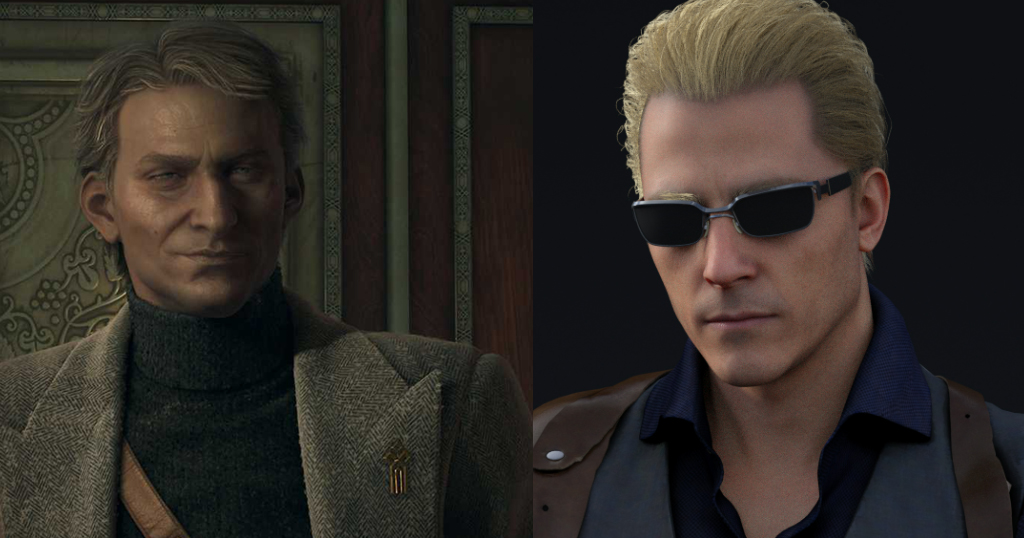
For example, we see a mature and competent façade, but we get a man who has resources and no damn clue what he is doing. A man who kills his researchers or subjects them to slavery, but is too cowardly to personally face Kyle. (More on that later).
On Genius Villains (Just an Opinion)
On one hand, The Baron’s entrance is great. He struts onto the scene saying ‘Kyle, Kyle, Kyle.’ He has all the theatrical swagger and bravado of any Shakespearian thespian worth their salt. We get a behind-head view of a man in military wears, building up to the reveal. He’s in control. He got you beat. And you’ve just been betrayed by someone you thought was an ally. As much as I love the power in his entrance, I wasn’t convinced.
We’re living in a time of mass media and brain-rot, the villain of our age is ignorance. Take a look at Big Jack Horner from Puss In Boots, The Last Wish. Obviously I’m not saying THIS villain fits into the Dying Light series. I’m saying something bigger about the type of evil that is conceptually more satisfying to defeat.
About Jack Horner
He has it all, a great life, every magical item in the world – yet his greed goes unfulfilled. He’s motivated by that simple, single inability to feel satisfied, a primal urge that really drives an interesting villain. No philosophy, no redeemable quality, and every semblance of greatness nothing more than a show. The Baron is respected and feared by his army, he fights his own battles, he puts his money where his mouth is and he’s dripping with Machiavellian intellect. These qualities make him, too familiar, which I don’t want to feel about a villain.
Sympathetic Villains
In Batman’s The Dark Knight, The Joker’s origins are opaque for good reason. He is motivated to turn our assumptions about heroism and human nature into a joke. In the end scene, The Joker sets up two bombs on two boats and gets the passengers to play game-theory with their own lives. When this doesn’t pan out, he decides to detonate them personally – because even in proving a point, right and wrong do not matter to him. The Joker is sympathetic for his resourcefulness – a man who comes from nowhere, robs and overtakes a crime syndicate and equals himself to the Wayne enterprise – only to burn the money. That’s chad energy right there. He embodies the punchline of life’s absurdities. He resents the entire system as a bad joke for reasons intentionally hidden from us, but on some twisted level, we all resent the injustice. Great villains teach us something.
The Revenge Angle vs Altruism: Wants and Needs
Kyle Crane’s revenge arc is a booming start to this story. It’s a power fantasy that pumps players up to run around a city again smashing zombies with furious hate. You rule the day by looting, and flee the night with the same energy as a country tourist bolting from their last bus stop to the closest bush. It’s all about survival, you see. But it sometimes contrasts with Kyle’s altruistic personality. This is a soldier and hero who wants to help others, puts so much of his skill to the use of assisting those he cares for. So it’s confusing when he gets thin skinned about a double-cross. Case in point, (spoilers by the way) – The Sheriff betrays you and leads you into a trap. But…later, Kyle acts very affronted by this – saying things like ‘…I’m coming for you!‘ And that’s where I broke with the character. His one-note vengeance trip can’t make sense when he also acts altruistically for the community.
What’s more, the Sheriff explains The Baron gave her an ultimatum – and they are trying to avoid war to protect what’s left. It’s not so much Kyle is resentful, but that it comes from this personal place – it makes this tough guy sound like a victim. ‘How could you do this to me?’ is a phrase that doesn’t resonate with Kyle’s tough-guy persona. Something more consistent might sound: ‘Damn right I’m alive. And I want fucking answers, Sheriff. I’m your best weapon against the Baron and you were willing to hand me over? How does that protect your people? Let’s ask them.’ This threatens what the Sheriff values most – her authority.
Wants and Needs
The deeper story emerges from character wants and needs. For example, going by narrative, Kyle wants revenge – but what he needs is to let go and accept change. Olivia wants to escape…and sometimes to free her father – but what she needs is human connection. Aiden wants his humanity back, but what he needs is his family and belonging with the people in the caves. When wrestling with large narratives all these wants and needs in multiple characters can sometimes slip up in a plot. Tying them together to make coherence is a challenge. Thankfully, there are strategies that meet this challenge beyond mapping wants and needs.
Quirks and Pay-offs
A character quirk gives a character a more concrete way to know them and relate in some consequential way. From hating onions to having allergies, writing such quirks into characters retains consistency and helps writers better understand a character’s motivations and decisions. Perhaps The Baron’s obsession with greatness is rooted in an environment that never said ‘no’ to his demands, making his actions and beliefs a projection of entitlement. Actually, while playing, I got the sense that it came from a wound – that his brilliance had gone unnoticed in his family. While I don’t want to sympathise with antagonists, it’s crucial we see their humanity and their flaws. The pay-off is a fine line that needs working out in any character.
Giving a character a quirk that resonates with their personality adds to the charm. In Dying Light: The Beast, I was initially charmed by the character Tom. Until he made an ‘electro-transducer-thing’ and I had to defend his bloody speaker system. Despite the Beach Boys nod and wink, and as much as I enjoy the Polish band that wrote it, I hated that mission. It went nowhere and the speaker breaks anyway. There was no pay-off to Tom’s character and he simply goes away after you craft a boombox.
The Cave people
The ultimate take-away from Dying Light is that change is inevitable, just like night and day. Somehow, I felt that the cave people had far more to offer to this story than the Town Hall survivors. As the old ways die, they are the mediators into the new world of Dying Light. They are the teachers who can help Kyle and Aiden ground their abilities into this new environment. It’s a little sad for me that much of their story is explored only briefly compared to the Town hall people. (At least, that’s my impression but again, this could all come down to my play style and attention deficit issues. oh look…an axe.)
The Beast: Story Beats, Adaptability and Survival
Lydia and Sven are by far my favourite allies in DLTB. They’re relatable, normal people who have been at the behest of cruel experimentations by this f’d up world and forced to adapt. I really like that angle. In the echo of COVID19, it’s relatable for so many people who found themselves alienated and isolated into caverns of their own making.
Change frightens us – to borrow a phrase from Jared Diamond’s book Collapse: How Societies Choose or Fail to Succeed, there is a creeping normalisation or gradualism to change that demands we don’t cling so fiercely to what we call normal. This comes across well in the Dying Light series, each game showing the inevitability of a world succumbing to death. DL 2 Staying Human, wrestles with the idea that the night time is an actual oppressive force to us now, changing us into monsters. The Beast acknowledges that, in becoming monsters ourselves, we have a duty to adapt and redefine this changed world.
Every scene is a moment – and in story, moments are constructs that help us to find meaning. You can think of them in terms of beats, like a little drum, a musical procession that grows more complex and sets the tempo. (One of my favourite sits that discuss this more is Story Grid, check them out.)
The story beats in The Beast’s main quest have a superb tempo to them. The tension, the music, it all ratchets up with each fun Chimera challenge, demanding new strategies to take them out. The story stakes elevate to The Last Supper, when you are captured and all seems lost. But your escape reveals your place, not as a man simply in pursuit of revenge anymore, but as a pack of rebels aligning to stop The Baron’s madness.
Leading with Fun, (And My Story Recommendation)
Dying Light: The Beast has a fun-first philosophy that restores most of the formula people enjoyed from the first game. The story needs an improved antagonist, not a cliché intellectual Albert Wesker template. If kyle made a decision that set his entire life on his crusade, The Baron is his shadow – the one who made the opposite decision. If Kyle is motivated by revenge, The Baron should be motivated by peace (albeit a twisted version of it). For me at least, I would have liked to see The Baron, not just as a smart and tough individual – but as a man born into power, inherited infinite resources and research and whose mind has gone.
 A More Convincing Showdown
Rather than a posh-speaking snob oozing superiority, I think a better match-up for Kyle is a character like Vaas Montenegro from Far Cry 3. Vaas is a fearsome and believable psychopath that truly embodies insanity and physical intimidation.
The challenge would be more unpredictable, his rationality less cogent, more chaotic, to get what he wants. And maybe all he wants is something simple, such as respect – something he can never get because of his heinous crimes. I wasn’t convinced The Baron would ever go toe-to-toe with a character like Kyle, whereas Vaas would. He would exploit chaos, use Chimera irresponsibly, threatening his own life as much as others, just for the fun of it. He would represent a more fun villain to defeat in this sense and align with the fun-first guidelines.
Aiden’s Role
I think Aiden’s role in this game was surprisingly small considering he’s framed as The Beast you’re supposed to hunt. While the confrontation with Aiden was a great pay-off, I sense there was something missing about his interactions with Kyle. This comradery deserved more team play, more side-by-side action, two beasts tearing through the undead and Chimera alike.
An amazing end would be that you fight as both Kyle AND Aiden (The Beast), switching between the characters using a boss-fight combo-trigger to take down one last, very tough Chimera protecting The Baron. Imagine, Dying Light 1 and Dying Light 2 MCs, fully available to Beast out on a mega-Volatile as The Baron tries to flee the rooftop. The perfect way to bring these stories together.
Lastly, Olivia’s role in this story comes off as strained. As the narrative progresses, I grow to like this character, which makes her betrayal hit hard. But, this is already after you were betrayed by The Sheriff. So The Baron’s continued manipulations of your allies is less impactful.
Conclusion:
The story itself is carried largely by the gameplay. It’s a little predictable in terms of narrative, and maybe that’s all it needs to be. The fact is, Dying Light: The Beast is a hell of a lot of fun. It meets the sort of game you’re playing and does what it should to encourage you to play more. It’s really enjoyable, has some funny moments, fun characters and a stunning map. However, when I think of a series that has a strong story leading the game, I think of something like God of War Ragnarok, as this game entails a strong narrative focus based on mythology.
And – speaking of God of War, you can get The Leviathan Axe (aka Ciupaga axe) in Dying Light: The Beast.
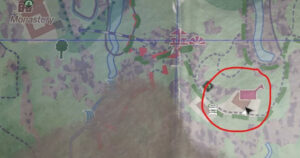

Head to the location on the map here, climb to the top of the house and grab it from the wall. It helped me kick the ass of so many bosses.
Nice touch Techland!
Great game.
What a Beast!
